
Stand Up for Cayuga Lake!
No Data Centers in Tompkins County!
Save The Date: Special Town Board Meeting October 21
After our community’s strong showing at the September 29th Town Hall meeting at the Lansing Middle School, the Town Board requested that their attorney draft language for a ban on data centers. While this was a fantastic outcome and no small victory, we must keep up the pressure on the Town to ensure that the ban moves forward as quickly as possible.
To that end, please mark your calendars and make plans to attend the Town Board's monthly meeting, next Wednesday October 21st, 6:30pm at the Town Hall.
Bring at least one friend or family member. Wear red. Sign up for Privilege of the Floor and encourage the Town Board to draft and propose language for a ban, so we can move to the next step in the process -- a public hearing on the matter.
Again -- we need to keep up the pressure if we want to see a ban happen. Please stay in the fight, even if all that means for you right now is to simply show up to the Town Board meeting. Our collective presence is our power!
Donate
Get a Yard Sign
FOR IMMEDIATE RELEASE
FLX Strong and CLEAN Celebrate Legal Victory Against Data Center Approval in Lansing
LANSING, NY – FLX Strong and Cayuga Lake Environmental Action Now (CLEAN), local
environmental advocacy groups, have secured a significant legal victory in their ongoing effort
to protect the natural beauty of Cayuga Lake and its surrounding community. In a recent ruling,
the court allowed FLX Strong and CLEAN to proceed with their lawsuit against the Town of
Lansing Zoning Board of Appeals (ZBA), TeraWulf, and Lake Hawkeye regarding a zoning
interpretation in favor of a proposed data center that poses environmental hazards.
The court's decision affirms FLX Strong and CLEAN's legal standing to challenge the ZBA's
classification of the data center as a permissible land use in a district adjacent to the lakefront
and to a protected wildlife preserve. The ZBA had sought to insulate the challenged
classification from legal challenge by arguing that FLX Strong and CLEAN and other community
members were not specifically harmed by it, but the court ruled that the ZBA’s arguments
“fundamentally misconstrue the law.”
The court’s ruling affirms the ability of local residents to challenge threshold zoning
decisions that can transform communities by opening them up to new development like data
centers. The court’s decision also recognizes the legitimate concerns of local residents regarding noise pollution and its impact on protected natural areas and communities.
"Judge Masler's decision affirms what we long knew: that Lansing and other area residents can
reasonably be said to face harm from TeraWulf's ecocidal development intentions; that the
ZBA's zoning decision is at the core of allowing that potential harm to move forward; and that
our challenge to the ZBA's decision is not one of personal vendetta, but instead a matter of
highly consequential legal misinterpretation,” said FLX Strong member Ken Wolkin. “FLX Strong
and our partners at CLEAN look forward to pursuing the rights of Lansing and other area
community members as this case moves forward."
"We are thrilled with the court's decision, which validates our mission to protect Cayuga Lake,"
said Stephanie Redmond of CLEAN. If the court had accepted the ZBA’s standing arguments, it
would have meant that its zoning decision in favor of the data center could not be challenged in
court. But the ruling highlights the importance of community involvement in local land use
decisions and reaffirms our commitment to ensuring that future developments prioritize
environmental sustainability."
The lawsuit was initiated by CLEAN along with fellow environmental advocates, FLX Strong, to
contest the ZBA's approval process and emphasize the need for careful consideration of the
ecological implications of industrial development. The court determined that the claims
presented by FLX Strong and CLEAN are ripe for judicial review, marking a pivotal moment in
the fight for responsible land use.
As the situation evolves, FLX Strong and CLEAN remain committed to transparency and will
provide ongoing updates to the community and the media. The ZBA and the involved
companies are expected to respond to the court's ruling soon.
Lawsuit Against TeraWulf, Lansing Zoning Board May Proceed, Judge Rules
Town of Lansing Hears TeraWulf Plans, With No Public Comment
‘There’s just a lot missing’: Lansing planning board takes first look at 401-page data center plan
Joint press release Jan 30, 2026:
FLX Strong & CLEAN are committed to protecting and preserving the sanctity of shared community resources and open spaces, as well as uplifting the concerns of nearby residents, in the face of harm from predatory development interests and zoning board deficiencies.
We seek to hold our town governing bodies and would-be developers accountable to their words and to the law. We feel that the proceedings in the Town of Lansing’s Zoning Board of Appeals were marked by bias, legal defects, and procedural irregularities that cannot be allowed to stand.
In ruling that a modern, large-scale data center fits under the traditional zoning use of "general processing," a slim majority of the Zoning Board has effectively rewritten the Town Code under the guise of interpretation. The decision is damaging both in the short term, by treating a data center as a permitted use by right, and in the long term, by opening the door to treating any type of business as "general processing," no matter its character. This is an alarming precedent for our community. We bring this action to ensure that the valid concerns of Town residents and others who stand to be harmed by this erroneous decision are not disregarded by biased and inadequate governance processes.
We will continue to educate the public as to the many serious impacts that data centers represent, both to our economy, in the form of rising electric bills and strain on the electric grid, and to our communities and environment, in the form of noise and light pollution, impacts on our lakes, open spaces, and recreational resources, and unnecessary CO2 emissions.
Article 78 against Terawulf documents
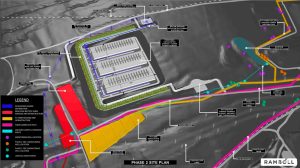
The proposed TeraWulf data center project in Lansing, NY, raises significant environmental and community concerns that require thorough review. TeraWulf, a publicly-traded cryptocurrency mining company, plans to build a massive 400MW data center complex on the former Cayuga coal plant site. Now is a good time to begin voicing your concerns. The NYS Department of Environmental Conservation has two draft permits queued up and ready to release pending public comment.
As you can see from the comments at our website, we think the renewal of an out-of-date water withdrawal permit should be rejected. And we think that the issuance of a new SPDES permit (State Pollution Discharge Elimination System permit) should be delayed until DEC has required a full technical review of the entire 434-acre site has been conducted and the draft permit broadened to include many Coal Combustion Residual analytes that are missing from the permit. At least one PFAS chemical, pentafluoropropionic acid (PFPrA), should be tested for as it is found in many landfill liner fabrics. It is crucial for the DEC, the Town of Lansing, and the public that lives near Cayuga Lake insist that data center proposal cannot be approved prior to full technical review and an Environmental Impact Statement being carried out.
Tompkins County legislators passed a resolution urging state regulators to employ a more thorough review process for a proposed AI data center in Lansing, with all public commenters speaking in favor of the resolution due to concerns over water quality, energy prices, and transparency. The vote on the resolution was 14 Ayes, one nay, and one abstention.
How Lake Mariner avoided sales tax at its data center.
Tompkins County Legislature Resolution on Water Withdrawal Permit.
Open Letter to Terawulf CEO Paul Prager
Lake Hawkeye Cayuga Operating lease agreement
Barry Sulkin Cayuga Comments Dec 29, 2025
CLEAN comments on Cayuga Operating draft water withdrawal permit and draft SPDES permit.pdf
Attachment A - Cayuga Operating Water Withdrawal Report to DEC Data
Attachment C - Independent Assessment_of_the Proposed Cayuga Data Campus-_2.pdf
Attachment D - Global Enviro-Comments FINAL.pdf
Attachment E - EarthJustice Sierra Club comments Cayuga-SPDES-1-30-15 Comments-Final1.pdf
Current status of Cargill Incorporated’s Permit Application for the Cayuga Salt Mine
Many of us in the environmental community, including CLEAN, feel that the DEC has not adequately addressed the potential risks associated with this decision. Concerns about mine stability and the potential for ecological harm remain, especially considering past incidents like the collapse of the Retsof mine in the Genesee River Valley.
During the public comment period, CLEAN and other stakeholders voiced their concerns, but the calls for a public hearing were not heeded. This has been a frustrating outcome, as many local municipalities and citizens strongly advocated for more transparency and public involvement in the decision-making process.
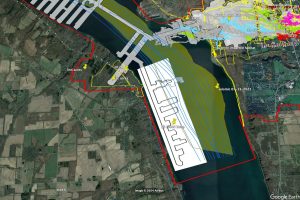
Cargill Incorporated previously submitted a permit application (0-9999-00075/00001) to renew and modify its Mined Land Reclamation Permit for the Cayuga Salt Mine, which includes plans to flood the abandoned S3 Zone of the mine beneath Cayuga Lake with wastewater, potentially impacting the environment and the community. The New York State Department of Environmental Conservation (DEC) declared itself the lead agency under the State Environmental Quality Review Act (SEQR) and issued a Negative Declaration despite the application being classified as a Type I action, which typically requires a more thorough environmental review.
*Significant concerns have been raised regarding the adequacy of Cargill’s application, including compliance with the Mined Land Reclamation Law, monitoring and treatment of waste materials, the potential for groundwater pollution, the stability of the mine, and the long-term reclamation of the affected areas;
*The flooding of the S3 Zone raises serious questions about the safety and environmental integrity of Cayuga Lake, particularly in light of prior instability noted in this area and the implications of storing not-fully-saturated brine beneath the lake;
*Various stakeholders, including environmental groups and local officials, have expressed concerns regarding the potential adverse impacts of Cargill’s proposed activities, highlighting the need for a more comprehensive environmental impact statement and public engagement;
Documents related to the renewal of the mining permit
See the links below for CLEAN's Request for Public Hearing and Comment on Cargill’s proposed renewal and modification of its MLRL permit for the Cayuga Salt Mine.
Comments Submitted by Technical Experts Not Affiliated With CLEAN
Read the recent CLEAN communications with DEC regarding concerns about the flooding of the mine:
Help Cayuga Lake Environmental Action Now and FLX Strong protect Cayuga Lake. All of your tax-deductible gift in the months of February, March, and April will go to fighting any data center or cryptocurrency mining facility within the Cayuga Lake watershed. The lake needs us and we need you. The Chris Dennis Environment Foundation(CDEF) is our fiscal sponsor and your gift to CDEF is tax-deductible. Click here to see the most efficient way to donate to CDEF.
In the heart of upstate NY lies 11 lakes called the Finger Lakes. The lakes are long, narrow, and oriented in the north–south direction. Carved out by glaciers around two million years ago, these lakes are now the home of over 1.2 million people and boasts a thriving economy in the wine and craft beer industries. Cayuga Lake, the second largest of the Finger Lakes, is about 40 miles long and reaches a depth of approximately 435 ft at its deepest point. As the main source of public drinking water for at least 40,000 people, it is important to safeguard the health of the lake.
Cayuga Lake might look pristine, but it is threatened by industry and it is already showing signs of distress.
Cayuga Lake is being jeopardized by many factors such as invasive species, inadequate treatment of wastewater, and emerging contaminants. Additionally, more intense weather events caused by climate change increases farm runoff and erosion of silt, leading to nutrient loading. Data indicates the increase in nutrients coupled with higher temperatures has been leading to harmful algal blooms.
Cayuga Lake Environmental Action Now (CLEAN) is an independent advocacy group that is working to protect Cayuga Lake. We are addressing industry polluters in an effort to highlight the need for remediation of industrial contamination. Based in Ithaca, CLEAN is working with researchers, local environmental groups, and a legal team to address water quality issues on Cayuga Lake. We work in partnership with many local organizations including the Cayuga Lake Watershed Network. CLEAN has fiscal sponsorship through the Chris Dennis Environment Fund. We are working to hold industry polluters accountable and the NYS Department of Environmental Conservation responsible for protecting a resource that belongs to ALL of us: Cayuga Lake - from the waves up above to the salt down below.